


15
June
,
2026
•

Georgia Hull

Many businesses focus on email design, subject lines, and automation when using Klaviyo, but overlook one of the biggest factors affecting deliverability and revenue: audience segmentation.
Poor segmentation leads to irrelevant emails, lower engagement, higher unsubscribe rates, and ultimately more emails landing in spam folders.
The best way to avoid spam filters is not simply sending fewer emails. It is sending more relevant emails to the right people.
Businesses that segment effectively often see:
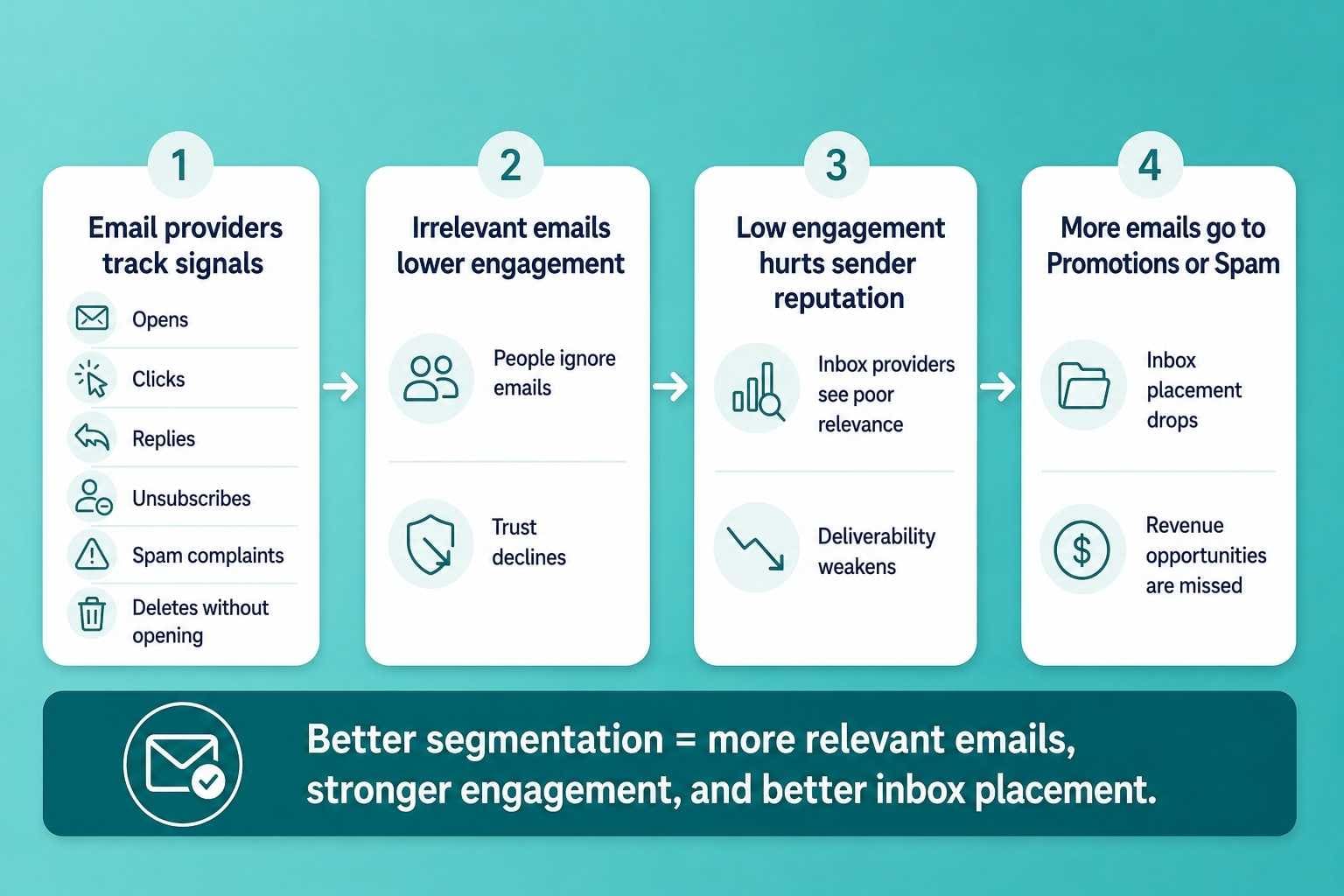
Email providers such as Gmail and Outlook monitor how recipients interact with your emails.
They look at signals such as:
When large numbers of recipients ignore your emails, inbox providers assume your content is not relevant.
Over time this can result in:
This is why segmentation is one of the most important deliverability strategies available.
Many businesses still use a "batch and blast" approach, where:
For example:
A customer who recently purchased a product may receive a discount offer for the same product.
A VIP customer may receive the same generic campaign as a first-time subscriber.
A subscriber interested in one category may receive emails about products they have never viewed.
The result is lower engagement and reduced trust.
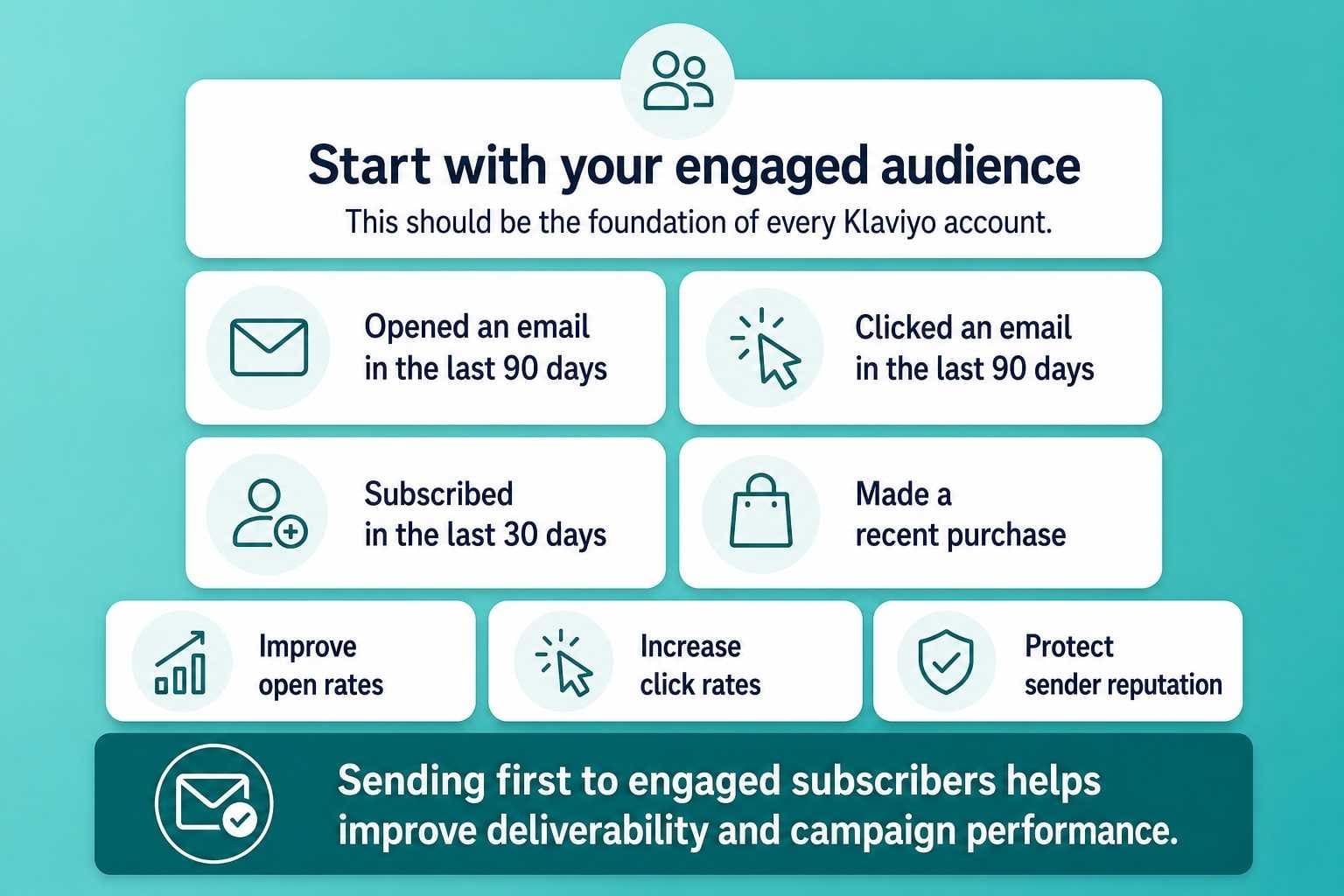
Your engaged audience should be the foundation of every Klaviyo account.
This segment typically includes people who:
Sending primarily to engaged subscribers helps:
Many successful brands prioritise engaged audiences for most campaigns and only send broader campaigns occasionally.
A common example might include:
People who:
OR
OR
This ensures newer subscribers are not excluded while maintaining strong engagement quality.
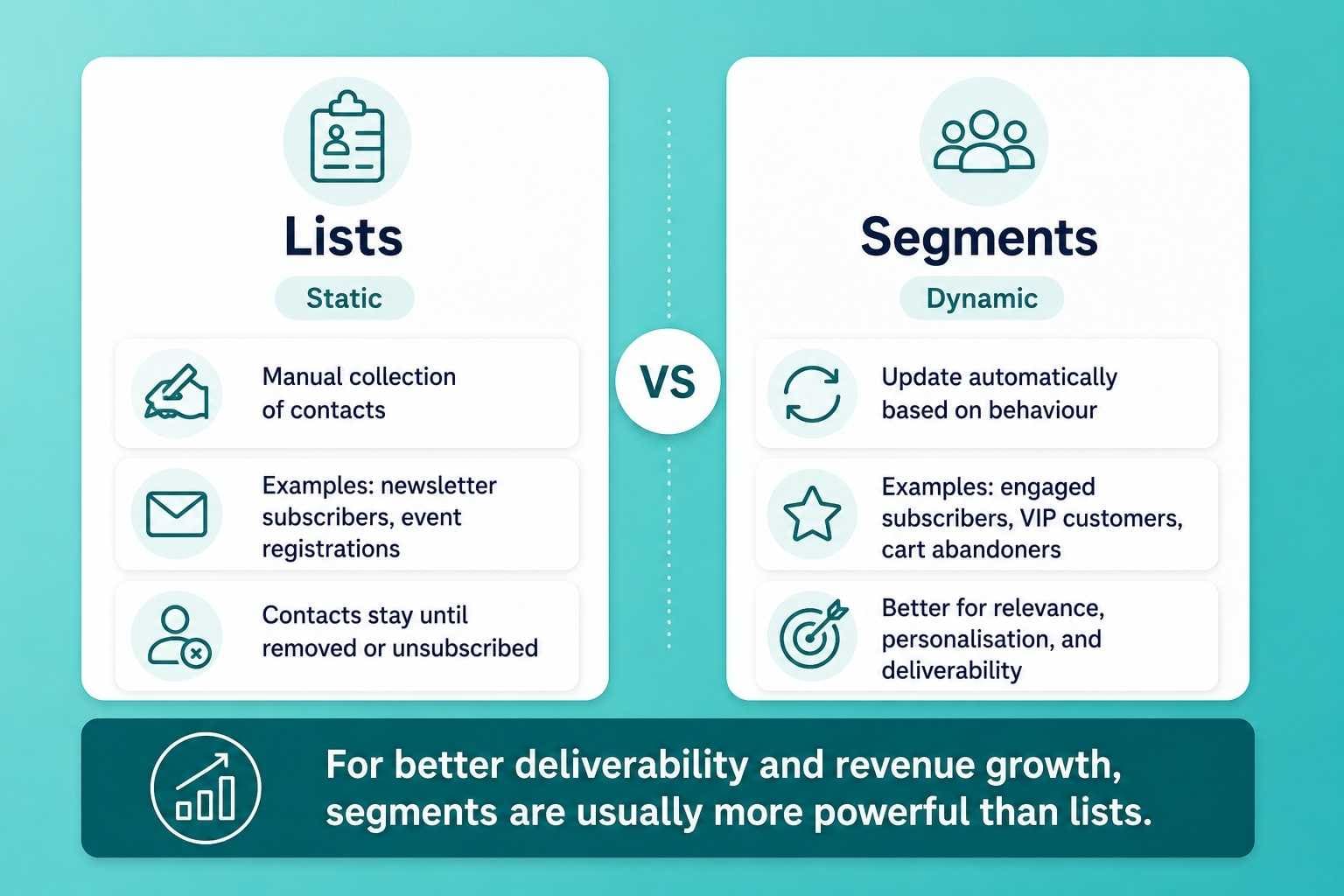
This is one of the most common Klaviyo questions.
Lists are static collections of contacts.
Examples:
Contacts stay on a list until they are manually removed or unsubscribe.
Segments are dynamic.
They automatically update based on customer behaviour.
Examples:
For deliverability and revenue growth, segments are significantly more powerful than lists.
Not all customers have the same value.
Some customers:
Creating a VIP segment allows you to:
VIP segments can be built using:
Rather than treating every customer equally, you focus additional marketing effort on your most valuable customers.
Segmentation allows you to personalise campaigns based on behaviour.
Examples include:
Customers receive recommendations related to previous purchases.
Subscribers receive content based on products they have viewed.
Customers who viewed products but did not purchase receive targeted follow-up emails.
Customers receive reminders to complete their purchase.
Subscribers receive campaigns aligned with categories they regularly engage with.
The more relevant the message, the higher the likelihood of conversion.
Subscribers rarely unsubscribe because they receive too many emails.
They unsubscribe because they receive too many irrelevant emails.
Effective segmentation ensures:
This improves customer experience while reducing list fatigue.
One of the biggest mistakes businesses make is failing to segment based on purchase history.
For example:
If someone purchases:
You might later recommend:
Without segmentation, these opportunities are often missed.
Purchase behaviour is one of the strongest indicators of future buying intent.
One of Klaviyo's most powerful features is predictive analytics.
Businesses can segment customers based on:
This allows marketers to become proactive rather than reactive.
For example:
Send retention offers before they leave.
Provide VIP treatment and exclusive offers.
Send replenishment campaigns before they need to reorder.
These predictive segments help maximise revenue while maintaining strong engagement.
Many businesses accidentally create poor-performing segments because they misunderstand segmentation rules.
Every condition must be true.
Example:
Customer:
AND
This creates a smaller, more targeted audience.
Only one condition needs to be true.
Example:
Customer:
OR
This creates a broader audience.
Using the wrong logic can dramatically change campaign performance.
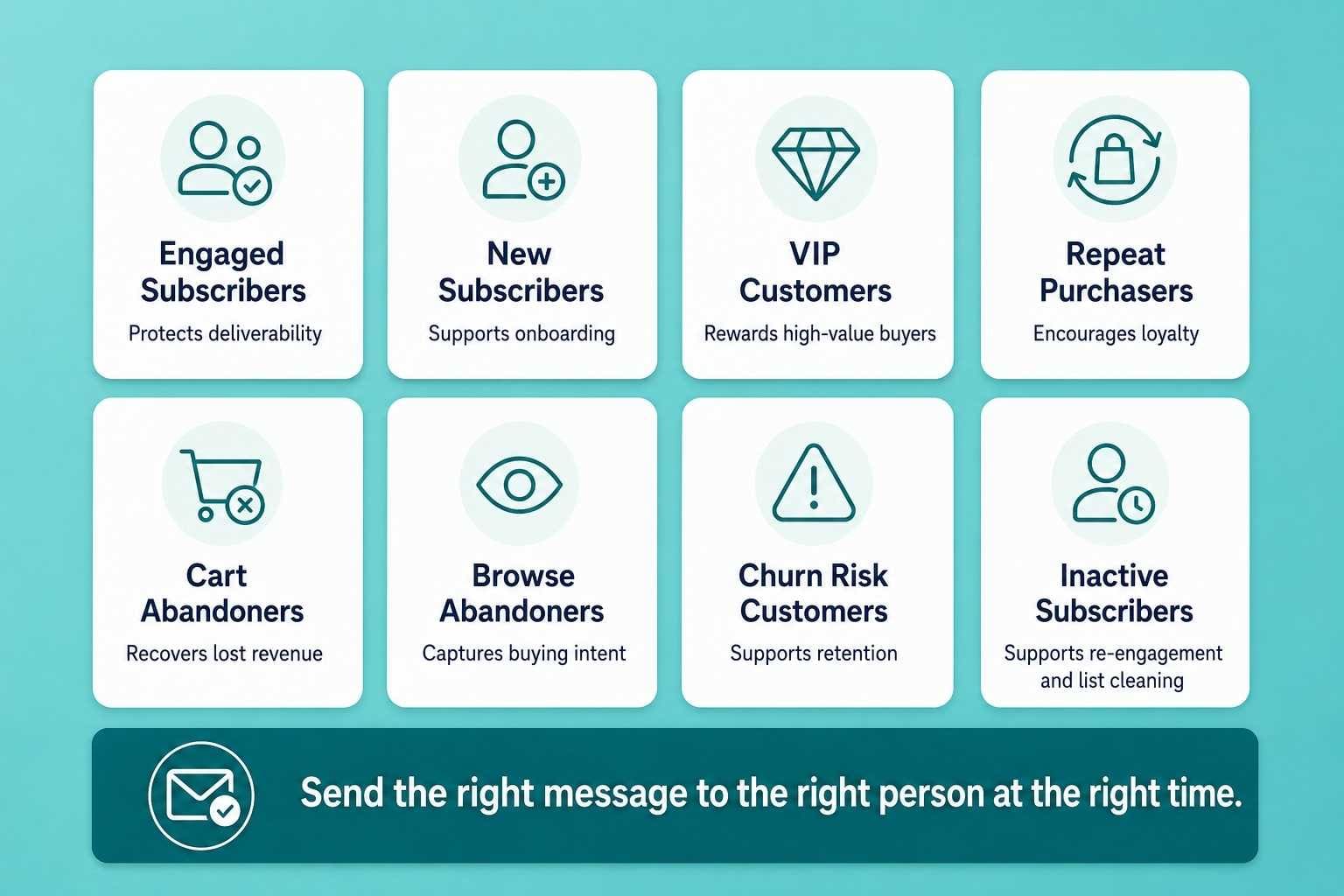
Most businesses should create:
Protects deliverability and inbox placement.
Supports onboarding and first purchases.
Rewards high-value buyers.
Encourages loyalty and repeat orders.
Recovers lost revenue.
Captures buying intent.
Supports retention campaigns.
Supports re-engagement and list cleaning.
Together, these segments create a more personalised customer journey while reducing spam risk.
The most effective approach combines:
The goal is simple:
Send the right message to the right person at the right time.
When relevance improves, engagement improves. When engagement improves, deliverability improves.
At Walk Digital, we help businesses build segmentation strategies that improve both deliverability and revenue.
This includes:
The objective is not simply sending more emails. It is sending smarter emails that generate more revenue while protecting your sender reputation.
The best way to avoid spam filters in Klaviyo is through smarter audience segmentation.
Businesses that rely on generic email blasts often see declining engagement, lower deliverability, and missed revenue opportunities.
Businesses that segment based on engagement, behaviour, purchase history, and predictive insights typically achieve:
Segmentation is not just a deliverability tactic. It is one of the most effective ways to grow revenue from your email marketing programme.
Yes. Better segmentation increases engagement rates, which improves sender reputation and inbox placement.
Most segments update automatically, but segmentation strategy should be reviewed every quarter.
No. Most campaigns should prioritise engaged subscribers.
For most businesses, engaged subscribers and VIP customers provide the highest value.
Yes. Targeted campaigns consistently outperform generic campaigns because they are more relevant to customer interests.
In many cases, yes. Customers are more likely to tolerate frequent emails if the content is relevant and personalised.

.svg)


Georgia is a marketer with over 15 years specialising in automation, driving revenue and brand awareness. Achieving growth by implementing strategies designed to drive customers to action from first contact along a journey through repeat purchase then on to passionate advocacy. She has experience working in challenging industries delivering consistent increased revenue and profits, with a focus on exceeding targets.
Specialties: Digital Advertising, marketing automation, segmentation and personalisation, content strategy, customer nurture, customer journey mapping, digital strategy, conversion tracking, database acquisition, CRM, process management, analytics.